
The Liquidity Supercycle Is Ending — And Crypto Is Becoming the Market’s First Real-Time Risk Barometer
• 8 min read • by Kelvin Jones
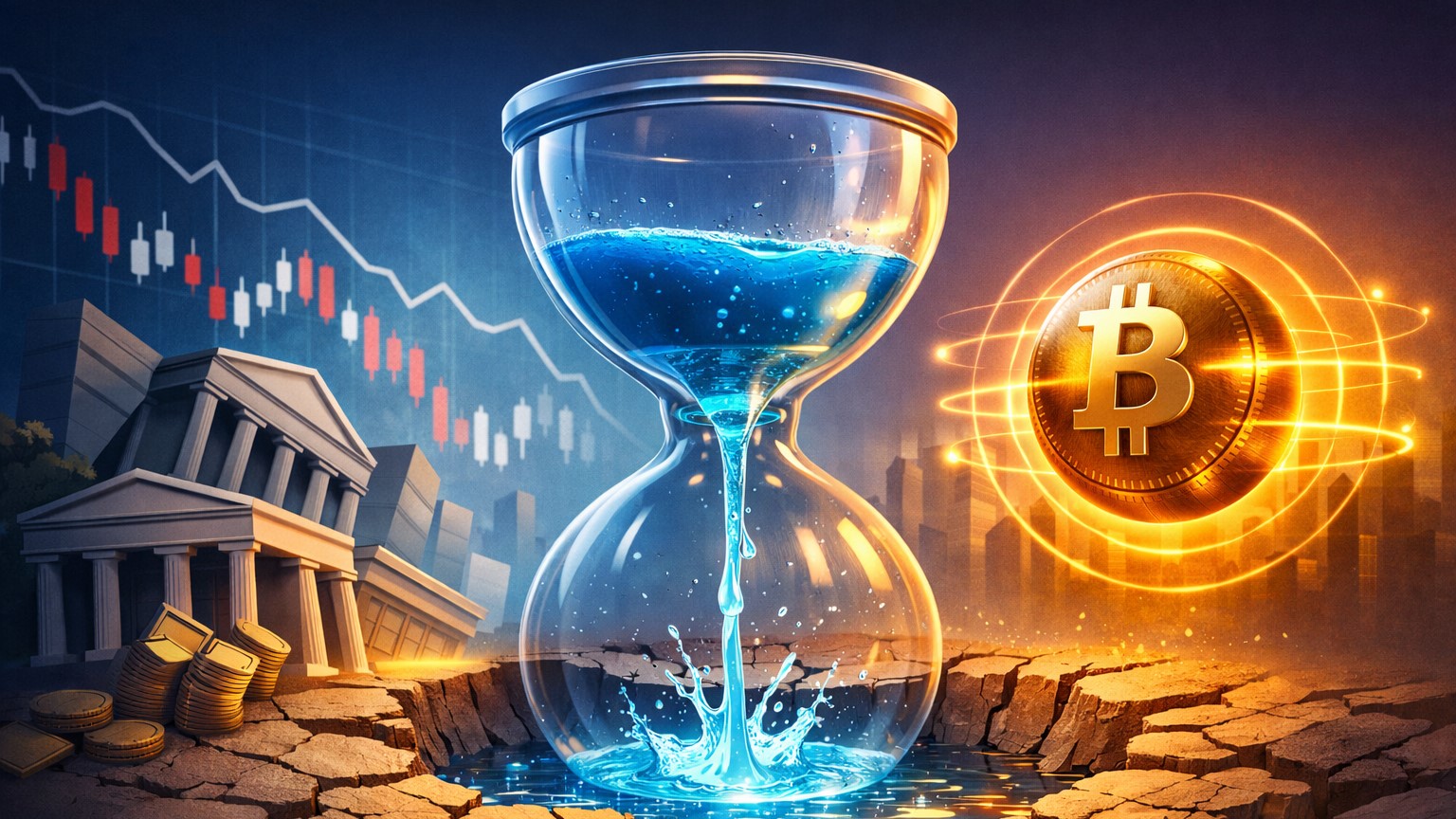
"The Liquidity Supercycle Is Ending — And Crypto Is Becoming the Market’s First Real-Time Risk Barometer"
🧠 Executive Summary
For more than a decade, global markets have been supported by abundant liquidity — low rates, quantitative easing, and accommodative policy. That era is ending.
Funding costs are rising, central banks are tightening, and cross‑asset volatility is returning. What’s different in 2026 is how crypto is responding: not as a speculative outlier, but as the fastest real-time indicator of global risk appetite.
Crypto is becoming the market’s early‑warning system.
🌍 The End of the Liquidity Supercycle
1. Funding Markets Are Tightening
We’re seeing:
- higher short-term funding costs
- widening credit spreads
- increased demand for dollar liquidity
These are classic signs of a liquidity contraction.
2. Central Banks Are Staying Restrictive
Sticky inflation and energy volatility are forcing policymakers to maintain tighter conditions.
The era of “easy money” is over.
3. Global Risk Assets Are Repricing
Equities, bonds, and EM FX are adjusting to a world where liquidity is no longer abundant.
This is the macro backdrop driving crypto’s new role.
🪙 Crypto as a Real-Time Risk Barometer
Crypto trades 24/7.
It reacts instantly to liquidity shifts.
It reflects global risk sentiment faster than any traditional asset.
1. Bitcoin Leads Liquidity Cycles
BTC is now:
- front‑running macro turns
- reacting to funding stress
- behaving like a global liquidity gauge
This is a structural change.
2. Stablecoin Flows Reveal Market Stress
Stablecoin issuance and redemptions are becoming a real-time liquidity map.
Rising redemptions = risk-off.
Rising issuance = risk-on.
3. Market Structure Is More Mature
With ETFs, deeper derivatives, and institutional flows, crypto is no longer a retail-driven volatility engine.
It’s a macro signal.
📊 What This Means for Markets
1. Crypto Will Lead Risk Cycles
Not follow them.
2. Liquidity-Sensitive Assets Will Diverge
BTC and ETH may outperform while long-duration assets struggle.
3. Stablecoins Become Systemic
They are now essential to global liquidity plumbing.
4. Execution Quality and Privacy Matter More
As crypto becomes a macro tool, demand for reliable, non‑custodial execution increases.
🧭 The Bottom Line
The liquidity supercycle is ending — and crypto is stepping into a new role.
It’s no longer just a speculative asset class.
It’s becoming the market’s fastest, clearest, and most global risk barometer.
This shift will define the next phase of digital asset adoption, market structure, and liquidity flows.
Published May 22, 2026. Last updated May 22, 2026.
Frequently asked questions
What is the liquidity supercycle?
A multi-year period of abundant global liquidity driven by low rates, QE, and accommodative policy.
Why is the supercycle ending?
Funding costs are rising, inflation is sticky, and central banks are reducing balance sheets.
Why is crypto acting as a risk barometer?
Crypto trades 24/7, reacts instantly to liquidity shifts, and reflects global risk appetite in real time.
How does tightening liquidity affect markets?
It increases volatility, reduces leverage, and forces repricing across equities, bonds, and FX.
What does this mean for digital assets?
Crypto is becoming a structural part of macro analysis, not just a speculative asset class.