
Jobs Shock and Market Relief — How a Negative Payroll Print Ignited Risk Assets
• 6 min read • by Kelvin Jones
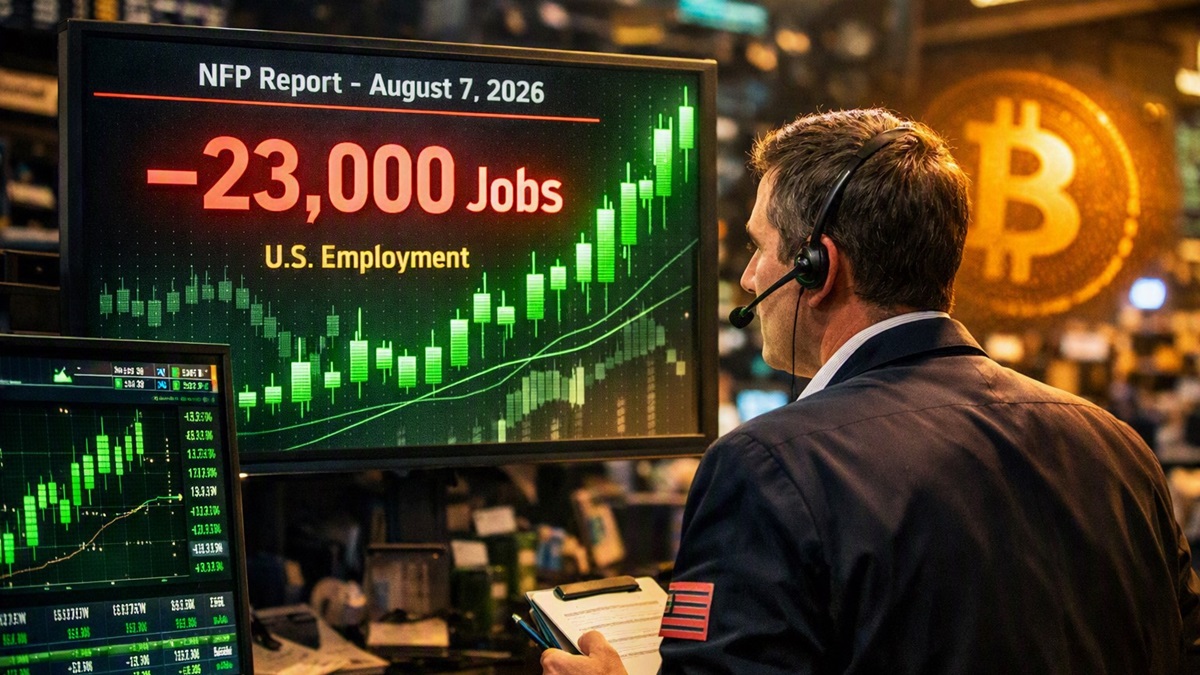
Jobs Shock and Market Relief — How a Negative Payroll Print Ignited Risk Assets
The July Nonfarm Payroll report landed like a macro grenade: –23,000 jobs, versus an expected +80,000 gain.
The unemployment rate held at 4.1%, but participation slipped to a five‑year low of 61.4%.
Markets instantly repriced the Federal Reserve’s path — rate‑hike odds for September collapsed from 55% to 20%.
📉 The Data Shock
The Labor Department confirmed the first monthly job loss in five months, with downward revisions to May and June totaling –103,000 jobs.
Economists called it a “slow hire, slow fire” environment — a labor market that’s cooling without collapsing.
💹 Market Reaction: Risk On
Wall Street celebrated the miss.
- Nasdaq +1.3%, S&P 500 +0.6%, Dow +0.3% — all headed for their best week since April.
- Treasury yields fell to 4.65% (10‑year) and 4.20% (2‑year), signaling Fed patience.
- Bitcoin hit $65,300, its August high, as traders linked the jobs miss to a policy pause.
🧠 Macro Interpretation
The report reframes the narrative: the Fed is no longer fighting an overheated labor market but a fragile one.
Under Chair Kevin Warsh, forward guidance has been minimal, making each data print a market event.
This jobs shock may set the tone for the Jackson Hole Symposium later this month, where policy patience could be codified.
🔮 Crypto and Liquidity Forward View
Crypto is positioned as the liquidity proxy for a data‑dependent Fed.
If employment softness persists, expect a renewed bid for risk assets and a rotation into digital liquidity plays — BTC, ETH, and privacy‑layer tokens like ZEC and XMR.
🧭 Takeaway
A negative jobs print is rare — but in 2026, it’s bullish.
Markets see it as a green light for policy patience and a signal that liquidity is returning.
The macro cycle has shifted from tightening to pause — and risk assets are already celebrating.
Published August 7 2026. Last updated August 7 2026.
Frequently asked questions
What happened in the July 2026 NFP report?
The US economy unexpectedly lost 23,000 jobs in July versus expectations for an 80,000 gain, with unemployment at 4.1%. Markets interpreted the miss as a signal for Fed patience.
How did markets react?
Stocks and crypto rallied as rate‑hike odds for September fell from 55% to 20%. The Nasdaq rose 1.3%, and Bitcoin hit $65,300.
Why does this matter for investors?
A negative jobs print shifts the macro narrative from tightening to pause, fueling risk‑asset momentum and reshaping liquidity expectations.