The $285M Drift Heist: A Governance Failure That Exposed DeFi’s Human Attack Surface
• 8 min read • by Kelvin Jones
The $285M Drift Heist: A Governance Failure That Exposed DeFi’s Human Attack Surface
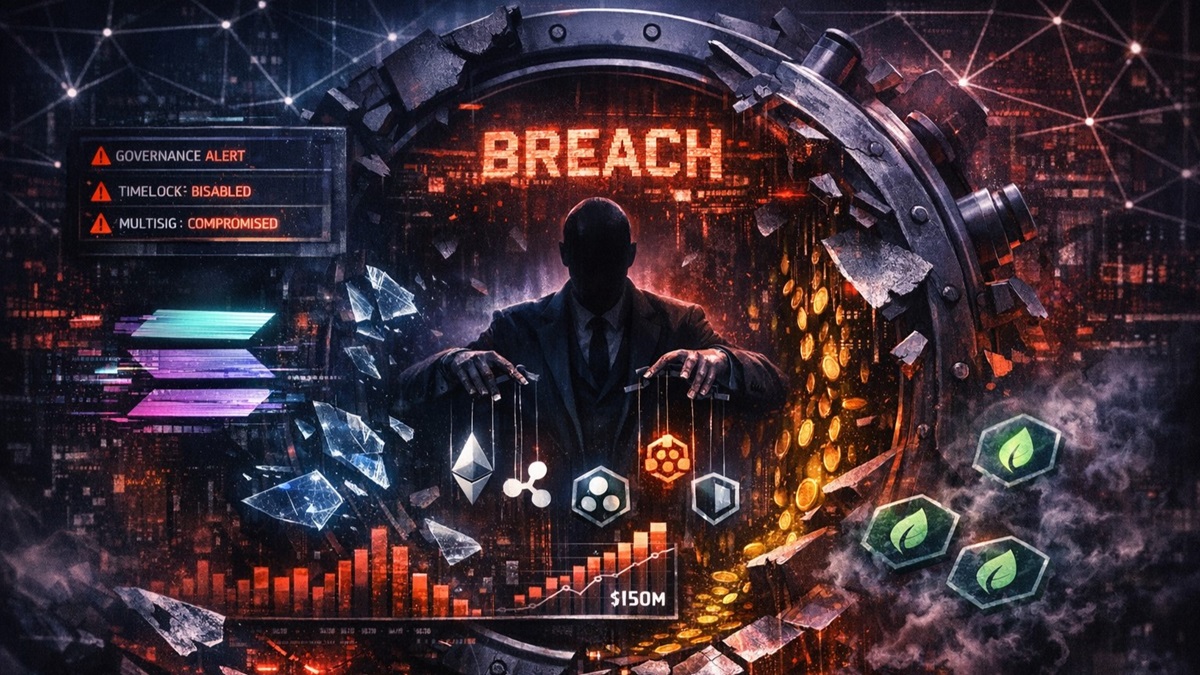
The Drift Protocol exploit wasn’t just another DeFi hack — it was a $285 million governance‑layer breach that revealed how fragile human‑controlled systems can be, even when the underlying code is sound.
This wasn’t a reentrancy bug.
It wasn’t an oracle glitch.
It wasn’t a bridge failure.
It was a multi‑week social‑engineering operation that tricked humans, bypassed safeguards, and weaponized governance.
And it’s a wake‑up call for the entire industry.
🧨 What Actually Happened?
Security firms and on‑chain forensics teams have now pieced together the attack:
1. The attacker created a fake token
A worthless asset — CarbonVote Token — was deployed with minimal liquidity.
2. They wash‑traded it to inflate its price
By trading with themselves across thin liquidity, the attacker made the token appear valuable.
3. They used it as collateral
Drift’s systems treated the fake token as legitimate collateral, enabling massive borrowing.
4. Governance protections had been weakened
Drift’s Security Council had recently migrated to a zero‑timelock configuration.
This meant admin actions could be executed instantly — no delay, no community oversight.
5. Social engineering sealed the deal
Attackers used durable nonce accounts and cleverly disguised transactions to trick multisig signers into approving malicious actions.
6. $285M was drained in minutes
Once the approvals were in place, the protocol was defenseless.
This was not a failure of Solana.
This was not a failure of smart contracts.
This was a failure of humans, governance, and operational security.
🕵️ Who Was Behind It?
Multiple intelligence firms have noted that the attack patterns resemble those used by North Korean state‑linked groups — long‑running, patient, and focused on human‑layer compromise rather than code exploitation.
Whether or not attribution is confirmed, the message is clear:
DeFi is now being targeted by nation‑state‑level adversaries.
This changes the threat model for everyone.
🧩 Why This Hack Is Different
Most DeFi exploits fall into one of three categories:
- Smart‑contract bugs
- Oracle manipulation
- Bridge vulnerabilities
The Drift heist was none of these.
It was a governance‑layer exploit, enabled by:
- human error
- signer fatigue
- poor nonce hygiene
- zero‑timelock governance
- fake collateral
- social engineering
This is the kind of attack that no audit can prevent.
📉 The Market Impact
The exploit triggered:
- sharp sell‑offs in SOL ecosystem tokens
- liquidity fragmentation across Solana DEXs
- renewed scrutiny of governance models
- a spike in “keyless protocol” narratives
But the biggest impact was psychological:
If a top‑tier Solana protocol can be socially engineered, anyone can.
🔐 The Blog Angle: Why This Matters for AnonSwap
The Drift hack highlights a fundamental truth:
The most dangerous attack surface in DeFi is the human one.
And this is where AnonSwap’s architecture becomes a powerful contrast.
1. No admin keys = no governance to exploit
AnonSwap has:
- no multisig
- no timelock
- no privileged roles
- no upgrade keys
There is nothing for an attacker to socially engineer.
2. No collateral = no fake‑asset risk
Drift was exploited through fake collateral.
AnonSwap doesn’t use collateral at all — it’s a pure swap protocol.
3. No accounts = no durable nonce tricks
The attacker abused Solana’s durable nonce system.
AnonSwap is accountless, removing this entire class of risk.
4. Privacy becomes a defensive layer
When nation‑state actors are involved, privacy isn’t a luxury — it’s protection.
AnonSwap’s zero‑data routing and accountless execution reduce exposure for everyday users.
🧭 What Comes Next for DeFi?
The Drift heist will likely reshape the industry in several ways:
1. Governance will be re‑evaluated
Zero‑timelock setups will be scrutinized.
Multisig signers will face higher operational standards.
2. Keyless protocols will gain momentum
The safest system is the one with the fewest human touchpoints.
3. Oracle‑based collateral will be questioned
Fake tokens shouldn’t be able to break real protocols.
4. Security will shift from code audits to operational audits
Human processes matter as much as smart contracts.
🧠 The Takeaway
The Drift Protocol exploit wasn’t a failure of DeFi technology — it was a failure of human governance.
It showed that:
- humans are the weakest link
- governance is an attack surface
- nation‑state actors are active
- collateral systems can be weaponized
- keyless, accountless protocols offer structural safety
For users, the lesson is simple:
Trust math, not multisigs.
Published April 4, 2026. Last updated April 4, 2026.
Frequently asked questions
Was the Drift hack caused by a smart‑contract bug?
No. The exploit was driven by social engineering, governance missteps, and misuse of durable nonce accounts — not a code flaw.
How much was stolen in the Drift exploit?
Roughly $285 million was drained in minutes, making it one of the largest DeFi heists of 2026.
What can users learn from the Drift hack?
Human‑layer vulnerabilities remain the biggest risk in DeFi. Protocols with admin keys or governance control are exposed.